Green and Olive Kitchen Ideas: A Colour-Led Design Guide
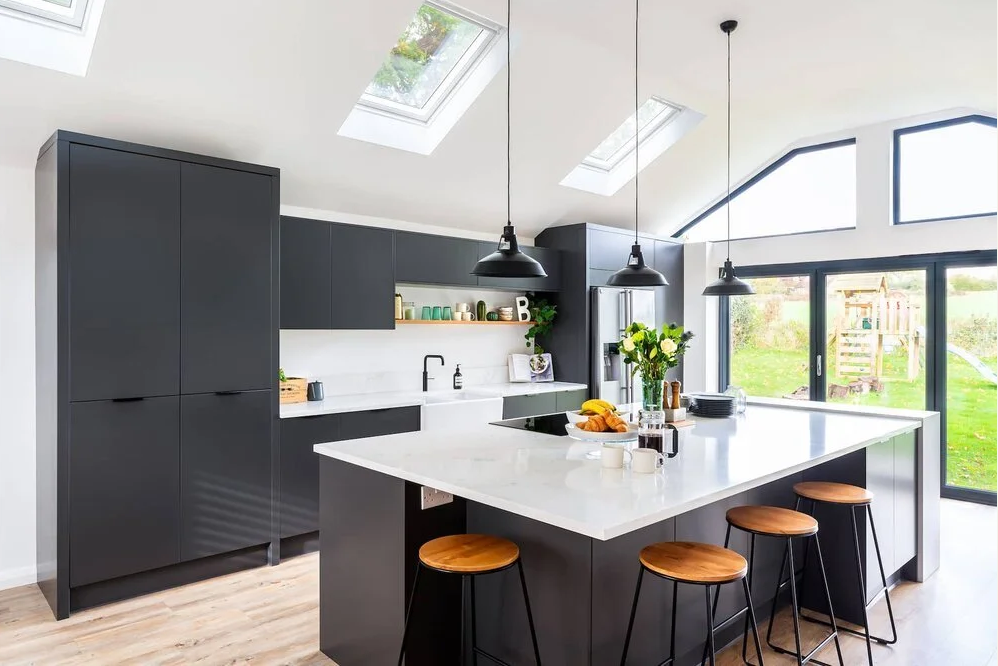
Green has been one of the most consistently chosen kitchen colours for a number of years now, and the palette continues to evolve rather than fade. The shift in recent years has been away from the bolder, darker forest and racing greens toward softer, earthier and more muted tones: warm olives, dusty sages and greyed eucalyptus shades that sit comfortably alongside natural materials and age as tastes move on. These are real green kitchen ideas and olive kitchen ideas drawn from genuine Kitchen Store projects across Sussex and Surrey, so you can see how the palette performs in real fitted kitchens rather than on a mood board.
Olive Kitchen Ideas: Warm, Earthy and Surprisingly Versatile
Olive sits in a warm middle ground between green and ochre that reads as a natural neutral rather than a strong colour statement, which is a large part of why it has sustained its popularity so well. In a well-lit room, an olive kitchen feels grounded and organic. In lower light, it deepens into something richer. It is much less demanding than it looks in swatches, which is why clients who come into the showroom unsure about olive tend to leave confident in it. Our Olive Nolte kitchen is one of the clearest examples of how the shade performs in a contemporary handleless layout. The matt olive fronts on the base units and island are paired with a pale quartz worktop and warm oak detailing at the open shelving end, which keeps the scheme feeling bright rather than enclosed.
Handleless matt olive: the contemporary version
A handleless olive kitchen in a matt finish lets the colour do all the work. In a large open run, a matt olive front reads as a single, considered surface rather than a collection of individual doors. Our Olive Green Contemporary Masterclass kitchen in Brighton shows how the shade works across a full-length run with integrated appliances and a white worktop. The contrast between the warmth of the olive and the crispness of the white quartz is what stops the scheme from feeling heavy.
Olive shaker: the warmer, more traditional take
An olive shaker kitchen sits comfortably in period properties and in homes where a flat slab front would feel out of place. The recessed panel in the shaker door gives the olive shade more depth and texture, and the colour pairs naturally with cream painted walls, oak or stone flooring, and warm brass cup handles. See our green kitchen project in Cuckfield for an example of how olive and a shaker profile work together in a family home with period character.
Stopping olive from feeling heavy
Olive is a warm, mid-depth shade and it handles light well, but a few decisions make the difference between an olive kitchen that feels rich and one that feels oppressive.
Worktop choice: a pale quartz, a white stone or a light marble-effect porcelain provides contrast and bounces light back into the cabinetry. Dark worktops alongside olive can make a run feel very dense.
Hardware: brushed brass and aged gold fittings warm the palette further and sit naturally with the earthy undertone of olive. Matt black is a cooler, more contemporary pairing. Chrome tends to fight with the warmth of the shade.
Upper cabinetry: painting wall units in a pale cream, off-white or soft white rather than matching the olive through the full room keeps the upper half of the kitchen light. Full olive from floor to ceiling in a smaller room can close the space down.
Sage Green Kitchen Ideas for a Calmer, Softer Scheme
Sage and eucalyptus sit at the cooler, greyer end of the green family and produce a different effect from olive: quieter, softer and very easy to live with. Where olive brings warmth, sage brings calm. It is particularly effective in kitchens with good natural light, where the grey-green tone shifts through the day from something almost neutral in the morning to a more clearly green shade in the afternoon. The green and grey shaker kitchen in Merrow shows how a cooler green-grey sits alongside complementary tones in a shaker layout without the scheme ever feeling busy.
Sage with oak and natural materials
The most popular pairing for sage green cabinetry is natural oak, whether as an oak worktop, open shelving in a warm timber, or an oak-veneered island alongside painted sage base units. The warm tone of the oak prevents the cooler sage from reading as cold, and the two materials together have a quality that feels considered without being showy. Our range of Masterclass kitchens includes several shaker options in sage and greyed green tones that lend themselves to this kind of natural material pairing.
Sage green shaker kitchens
A sage green shaker kitchen is one of the most consistent design choices in country and coastal homes across Sussex and Surrey. The recessed panel of the shaker door gives the colour a gentle shadow line that adds depth, and the style sits naturally in older properties where a flat slab front would feel incongruous. Cream walls, limestone or flagstone floors, unlacquered brass fittings and a Belfast sink are the natural companions.
Dark Green and Forest Green Kitchens: Going Deeper
Darker greens, forest, racing green and deep bottle shades, were among the most talked-about kitchen colours a few years ago, and they remain a strong choice for the right room and the right brief. The overall direction in green kitchens has shifted toward the softer, more muted end of the palette, but a dark green handled or handled kitchen used well still produces one of the most striking and considered results available.
Forest green on an island
Using a forest or racing green on the island alone, while keeping the surrounding run in a lighter shade, is the most accessible way to introduce a deep green without committing the whole kitchen to a strong colour. The island reads as a statement piece and the contrast with lighter cabinetry creates depth and visual interest. It is also the most forgiving approach if your kitchen does not have the ceiling height or natural light to carry a full dark green run confidently.
Full dark green runs in the right room
A complete run of forest or racing green cabinetry works best in rooms with high ceilings, strong south or east-facing light, and pale worktops and flooring to provide contrast. Without those conditions, it can make the space contract. Our green and gold shaker kitchen in Woking is a useful reference point: a deep green shaker across the full base run, balanced by pale upper cabinetry and warm gold hardware that keeps the scheme feeling opulent rather than heavy. Our lilac and green kitchen in Horsham shows how a deeper green can be paired with an unexpected second colour and balanced across different zones so neither dominates.
Green Kitchen Combinations: Wood, Grey and Metallics
Green and wood kitchens
Green cabinetry and natural wood are one of the most natural pairings in kitchen design, and the combination is increasingly common in open plan layouts where the kitchen needs to feel warm and connected to the living space rather than clinical. The key is proportion: wood used as an accent, a shelving run, an island worktop, a tall larder front in an oak veneer alongside painted green units, reads better than a fifty-fifty split across every surface. Our open plan grey-green kitchen in Brighton shows how a green and wood palette holds up across a large open plan floor, where the materials need to read coherently from a long distance.
Green and grey kitchens
Green and grey is a two-tone pairing that rewards careful shade selection. The key is to avoid using shades that are too similar in depth and warmth, because they can blur together rather than creating the deliberate contrast the scheme needs. A warm sage or olive on the base units alongside a cooler mid-grey on the upper units, or vice versa, produces a cleaner result than two tones of a similar green-grey sitting side by side. For more on grey as a primary palette, see our sister post on grey and white kitchen ideas.
Green with brass and gold
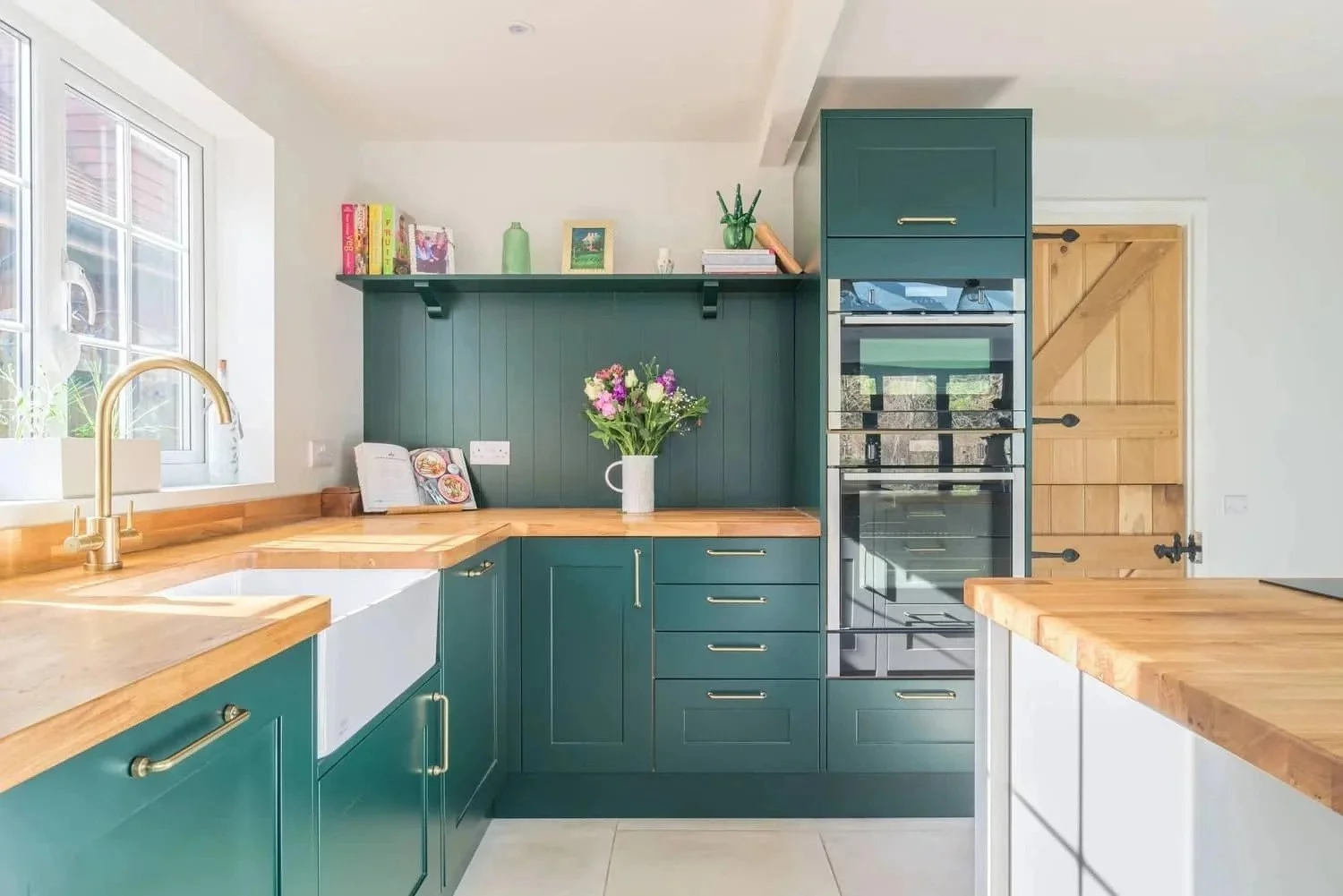
Brass and gold hardware sits naturally alongside green cabinetry, and the combination has become one of the strongest visual signatures in contemporary fitted kitchen design. Brushed brass tap fittings, cup handles and bar handles add warmth and a considered quality that feels particularly at home in shaker and in-frame kitchens. Polished gold reads as more formal. Both work, and the choice usually comes down to the wider material palette of the room.
Green with matt black
Matt black hardware alongside green cabinetry produces a cooler, more urban result. It works well in contemporary handleless designs where the purity of the combination is part of the appeal. In a shaker kitchen, matt black fittings can feel slightly harsh alongside the warmth of an olive or sage tone, so it is worth testing samples together before committing.
How to Choose and Live with a Green Kitchen
Green is a more forgiving colour than people expect, but a few decisions make a material difference to how the finished kitchen looks and feels in your specific room.
North-facing rooms: avoid very cool grey-greens, which can read as cold in low natural light. Olive and warm sage are more reliable choices because their yellow-brown undertones carry warmth even in diffused light.
South-facing rooms: almost any shade of green works well. Deep forest and racing green are at their most confident in rooms with strong natural light.
Room size: lighter sage and greige-green tones keep a smaller kitchen feeling open. If you want a darker shade in a compact kitchen, use it on the island or the base units only and keep the upper cabinetry lighter.
Matt vs gloss: green finishes almost always read better in matt. Gloss on a green can produce a slightly plastic quality, particularly in the mid-green and olive range. Silk and satin are a practical middle ground.
Worktop and floor pairing: get physical samples of your shortlisted green and hold them against your actual worktop and floor materials in the room. The colour relationship that works in a showroom may behave differently in your specific light.
If you are thinking about longevity, the softer and more muted greens, warm olives, sage and earthy grey-greens, have shown considerably more staying power than the bolder, darker shades that led the trend a few years earlier. It is worth bearing in mind that kitchen colour directions are shifting again: deeper reds, warm terracottas and ochre yellows are beginning to appear in new kitchen designs, though it is still early to know which of those will settle into something lasting. For most homeowners planning a kitchen they want to live with for ten years or more, a well-chosen earthy green remains a sound and considered choice.
The most reliable way to make a confident decision on a green kitchen is to see the shades in person. At our showrooms in Brighton and Hove, Horsham and Guildford you can see green and olive kitchens at full scale, with real lighting and real material pairings beside them. A sample that looked uncertain on a website very often looks completely right in the showroom.
Common Questions About Green and Olive Kitchens
-
Yes, and green has been consistently popular in UK kitchen design for a number of years. The palette is evolving rather than peaking: the direction has moved from bolder, darker forest and racing greens toward softer, more muted earthy tones such as warm olive, sage and greyed eucalyptus. These shades have shown real staying power because they work across both contemporary handleless and classic shaker styles and pair well with a wide range of natural materials.
-
Pale quartz or white stone worktops, warm oak flooring or shelving, and brushed brass or aged gold hardware are the most reliable companions for olive cabinetry. For wall colours, off-white, warm cream and earthy terracotta all sit well with olive. Grey is also a strong pairing, either as a two-tone combination on the units or as a floor or splashback material. For full worktop pairing guidance, see our kitchen worktop materials guide.
-
Less so than people assume. Green, particularly olive and sage, has been part of mainstream UK kitchen design long enough that it is no longer considered a niche or risky colour choice. A well-executed olive or sage kitchen in good condition is unlikely to deter buyers in the Sussex and Surrey market. Very deep forest or racing green on a full kitchen run is a stronger statement and may appeal to a narrower buyer profile, but it is the quality of the installation rather than the colour that tends to drive buyer response.
See Green and Olive Kitchens in Person
If you are drawn to green but not yet certain which shade or style is right for your home, the best next step is to see the options in person. Looking at green kitchens on a screen gives you a direction; seeing them at full scale in a showroom, with the right lighting and real material samples beside them, gives you a decision. Book a design consultation with The Kitchen Store and one of our designers will help you choose the shade, finish and layout that suits your home and your light.
If you are also weighing up grey or white alongside green, our sister post on grey and white kitchen ideas covers both palettes in the same depth.