Architecture in the everyday
True Handleless Kitchens
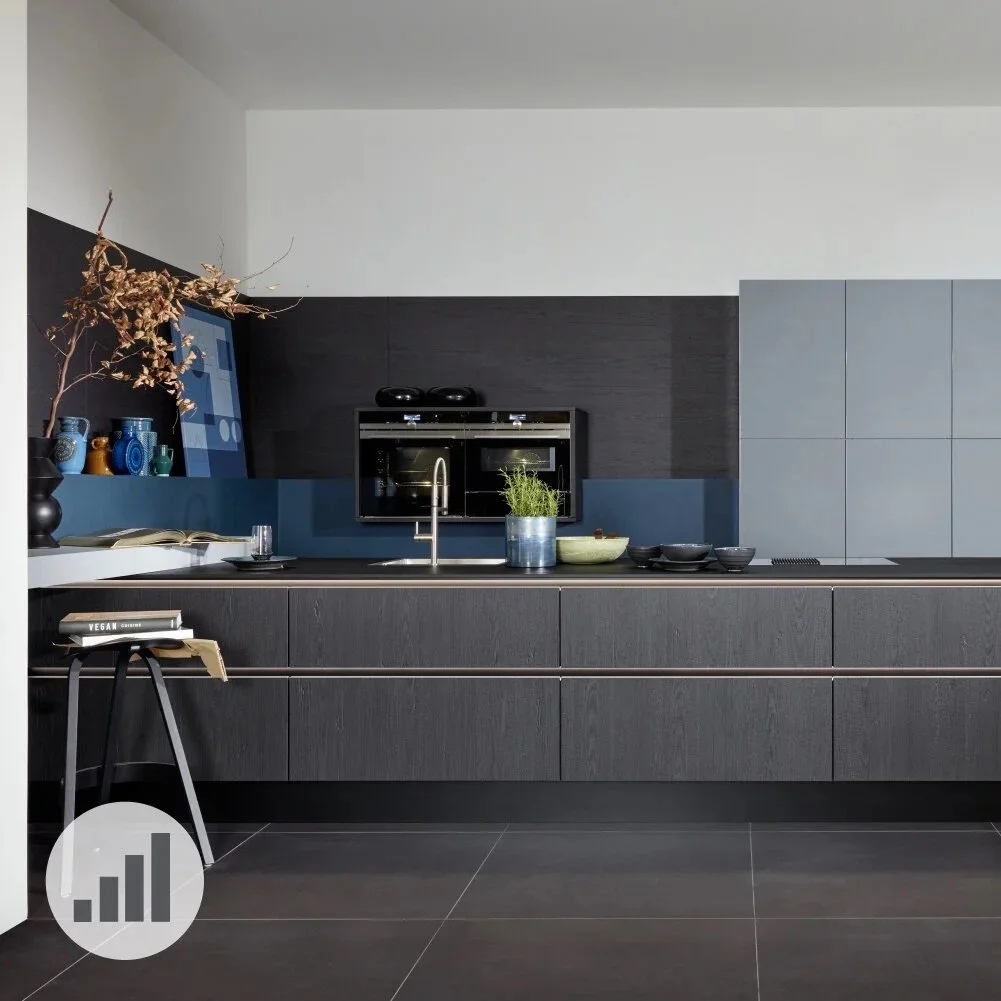
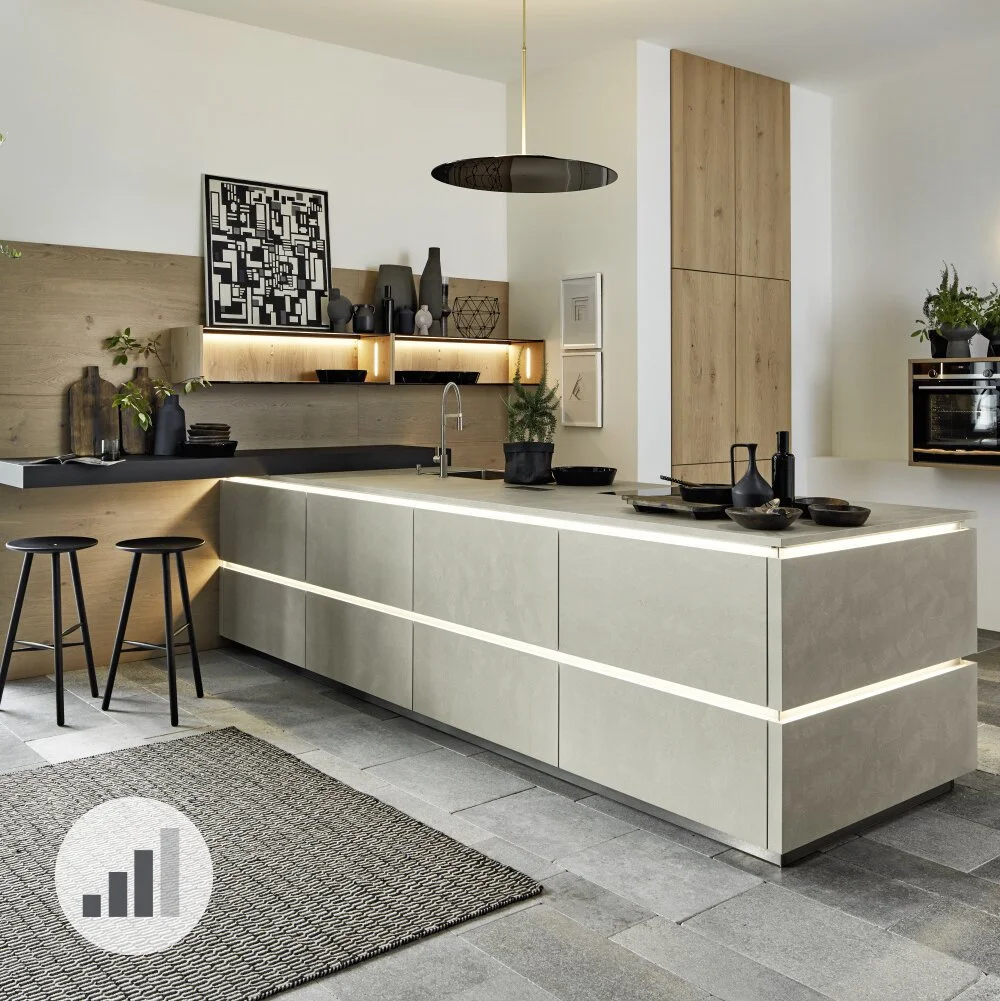
True handleless kitchens are defined by an aluminium rail system integrated into the cabinet itself, a continuous recessed channel that runs across the full width of each unit. The result is an unbroken horizontal line that gives the kitchen its distinctive architectural presence, and a surface as clean and precise as any kitchen can be.
What is a true handleless kitchen?
A modern clean lines kitchen is defined by simplicity, balance and a reduced visual feel. Rather than relying on decorative detailing, the focus is on proportion. Cabinetry tends to feature simple forms and restrained styling, creating a space that feels calm, uncluttered and easy to live with.
This style works particularly well in open-plan homes, where the kitchen needs to sit naturally within a wider living space. It can feel bold and architectural or soft and understated, pairing comfortably with contemporary materials such as quartz, timber textures, stone surfaces and integrated appliances.
Key features of a true handleless kitchen
Continuous Aluminium Rail
A recessed channel runs the full length of each unit run, creating the horizontal lines that define the style and providing a consistent, ergonomic grip point.
Flat Slab Door Fronts
Smooth, uninterrupted surfaces in matt, textured, or woodgrain finishes, the door becomes the visual centrepiece.
Precise German Engineering
The manufacturing tolerances required for rail alignment to work consistently across unit runs are a hallmark of German kitchen production.
Rail in a Choice of Finishes
Brushed aluminium, anthracite, brass, and matt black are common options; the rail can contrast or coordinate with the cabinetry for different visual effects.
Easy to Clean
One continuous wipe along the rail replaces cleaning around individual handles, a genuine practical advantage in a busy kitchen.
Explore true handleless kitchen ranges
Whether you're looking for something quietly neutral or a bolder, more architectural result, each range offers a different take on one of the most considered styles in contemporary kitchen design.
Our real true handleless kitchens
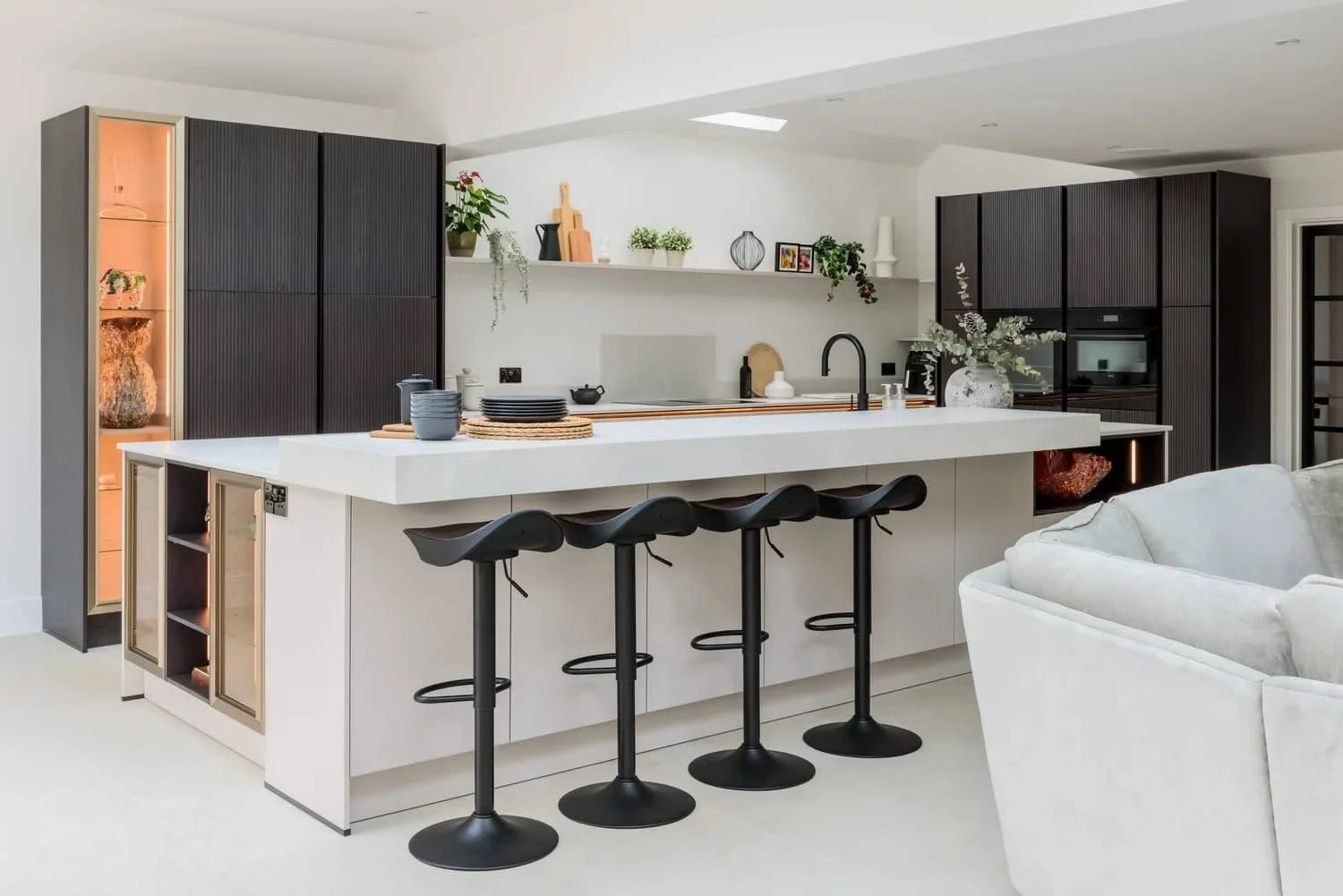
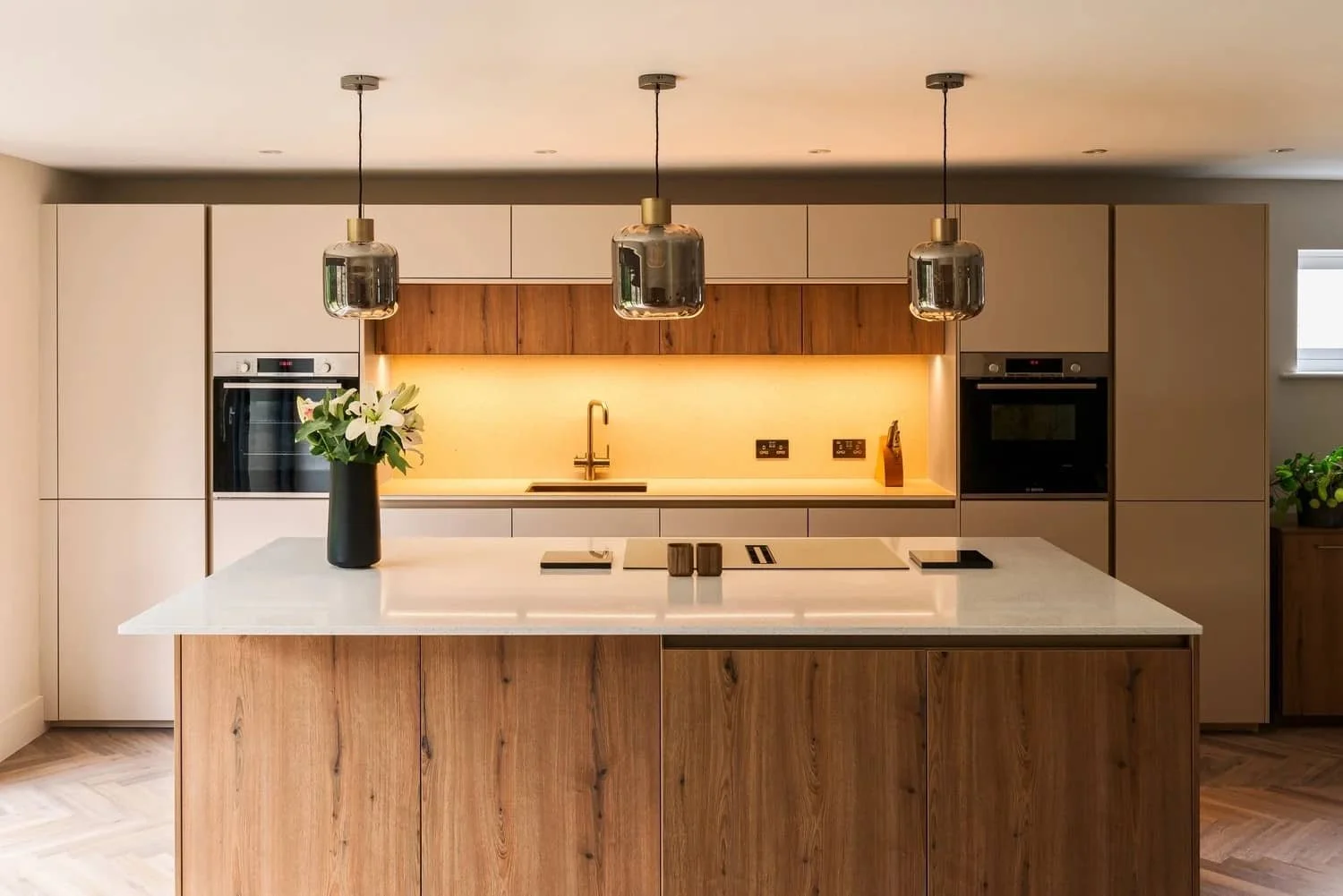
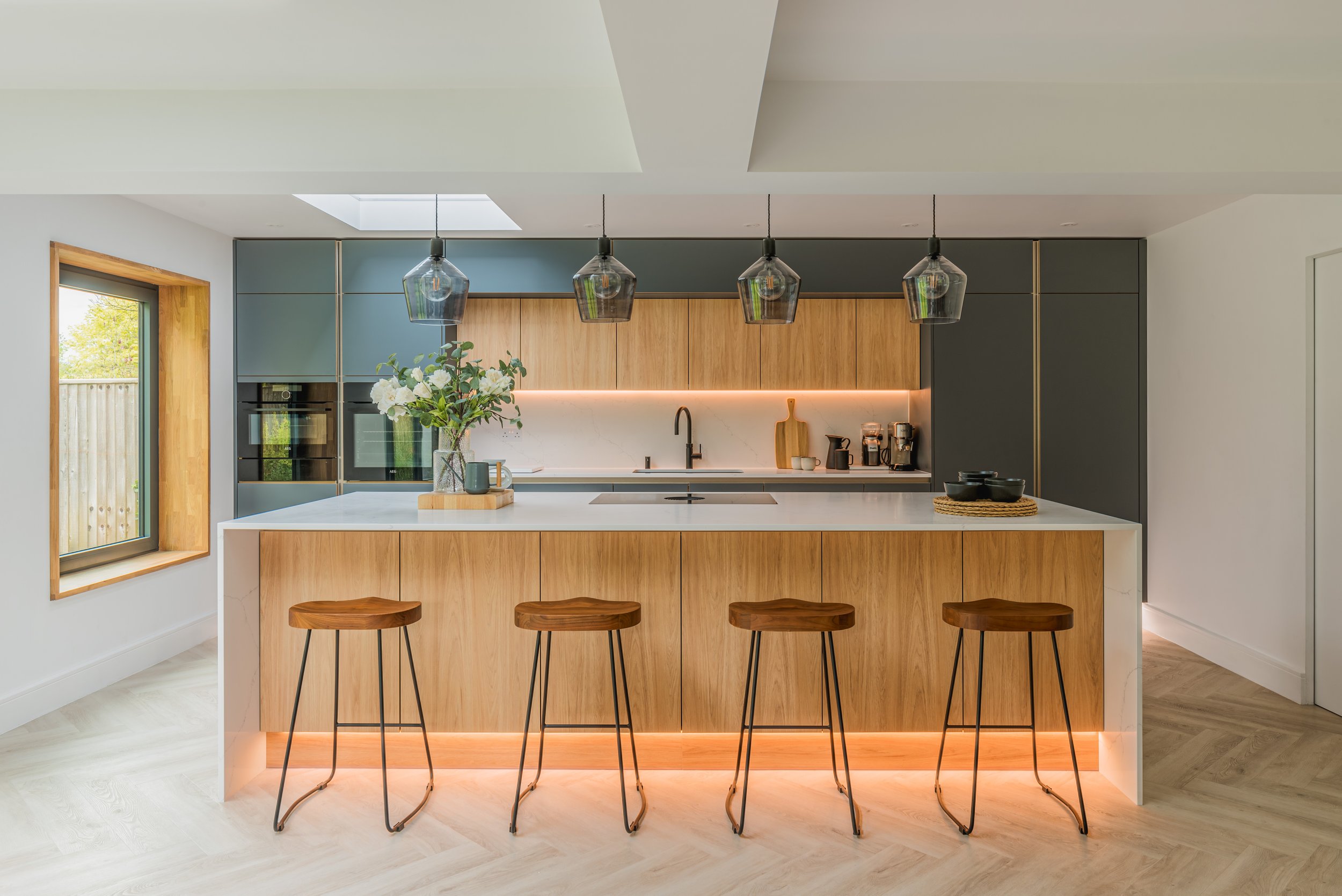
See how true handleless kitchens come to life in real homes across Sussex and the South. Each project demonstrates what precision and restraint can achieve: a kitchen designed to feel as good as it looks.

Frequently asked questions about True Handleless kitchens
-
In a true handleless kitchen, the grip is created by an aluminium rail fixed inside the cabinet, the door front is reduced in height to create a channel behind it. In a J-pull kitchen, the groove is shaped into the door itself, so the door is full height and the grip is part of the door rather than a separate rail. True handleless creates a more consistent, ergonomic grip (especially on heavier drawers and integrated appliances) and a more architecturally precise horizontal line.
-
The precision required to align a continuous rail across multiple unit heights, including integrated appliances, is genuinely easier to achieve with the tight manufacturing tolerances that German kitchen production is built around. German manufacturers use standardised raster systems (height increments that ensure doors align precisely across the full run). This consistency is part of what makes the style work visually and practically.
-
Yes. The grip channel is straightforward and intuitive to use, and there are no protruding handles to catch clothing or bag straps. Vertical rail profiles on tall units and integrated appliances make them easy to open too. The rail system suits most households well.
-
Matt lacquered, woodgrain, and textured finishes are all popular. High-gloss works in the right setting but tends to show fingerprints more noticeably. The rail finish is a separate decision, a contrasting rail colour such as brushed brass against a painted door adds an intentional design detail, while a neutral or matching rail keeps the look unified.
-
Very well. The absence of protruding handles means you gain usable space in narrower kitchens and galley layouts, typically 30-40mm per door that would otherwise have a handle projecting into the room. The continuous horizontal line also helps a small kitchen feel longer and more resolved.
-
The best way is to visit a showroom and experience it in person, the horizontal rail lines, the quality of the finish, and the way the mechanism feels in use are all things that work better experienced than described. Book a design consultation or just come in to explore.