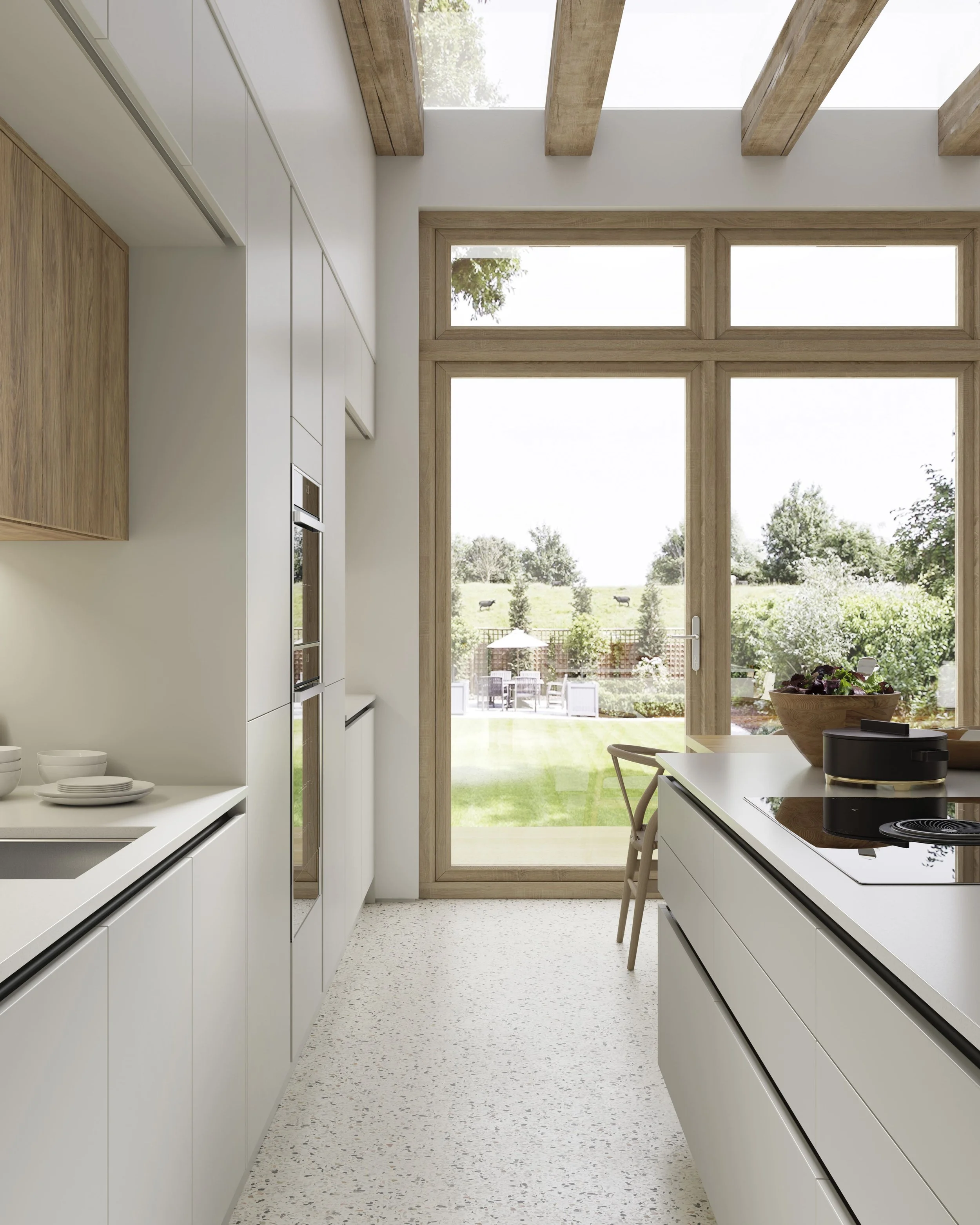
Japandi Kitchen Design: What It Is and Why It's Trending
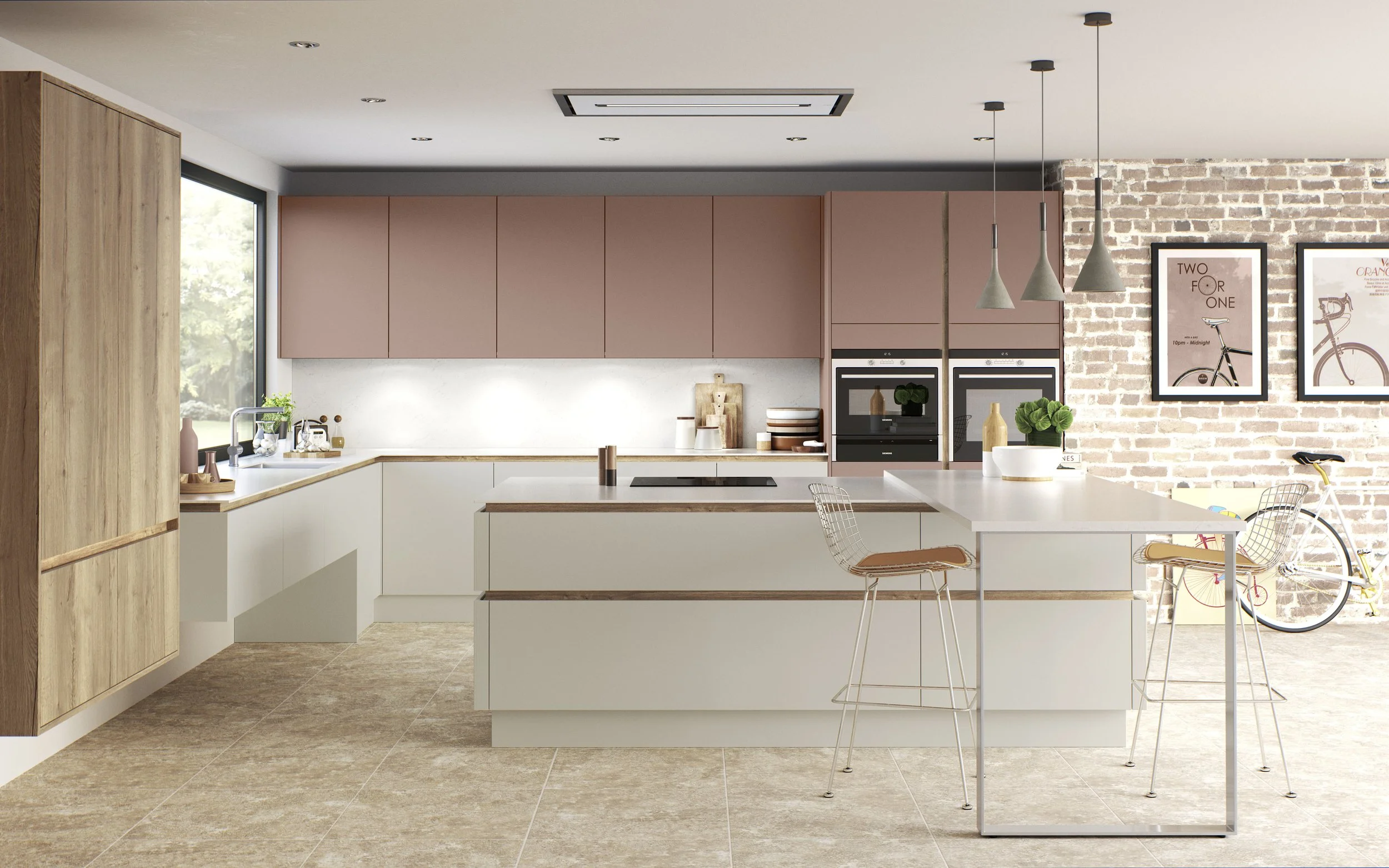
In a world where our homes have become our sanctuaries, the search for calming, clutter-free spaces has never been more important. Enter Japandi kitchen design, a harmonious blend of Japanese minimalism and Scandinavian hygge that's capturing the hearts of UK homeowners.
This sophisticated design philosophy combines the serene simplicity of Japanese aesthetics with the warm functionality of Nordic style, creating kitchens that are both breathtakingly beautiful and deeply practical.
If you're considering a kitchen renovation or simply curious about this trending style, this comprehensive guide will show you everything you need to know about creating your own Japandi kitchen.
What Is Japandi Kitchen Design?
Origins: Japanese Minimalism Meets Scandinavian Comfort
Japandi design emerged as a natural fusion of two design philosophies that share surprising common ground. Japanese design principles emphasise ma (negative space), wabi-sabi (finding beauty in imperfection), and a deep connection to nature. Scandinavian design celebrates lagom (balance) and hygge (cosy contentment), prioritising functionality without sacrificing warmth.
When these approaches merge in a Japandi kitchen, you get a space that feels both zen-like and inviting – never cold or sterile, but always purposeful and serene. This philosophy creates kitchens that serve as peaceful retreats from the chaos of modern life whilst maintaining the practical functionality that UK homeowners demand.
Key Principles: Simplicity, Functionality, Nature-Inspired Elements
A true Japandi style kitchen revolves around several core principles that guide every design decision:
Intentional Simplicity: Every element serves a purpose, with no superfluous decoration or unnecessary embellishment
Natural Materials: Wood, stone, and other organic textures take centre stage, creating tactile warmth and visual interest
Muted Colour Palette: Earthy tones, soft whites, and warm greys create a cohesive, calming atmosphere that promotes relaxation
Clean Lines: Geometric forms and uncluttered surfaces promote visual peace and mental clarity
Connection to Nature: Natural light, plants, and organic shapes bring the outdoors in, fostering a sense of harmony with the natural world
These principles work together to create spaces that feel both sophisticated and approachable, modern yet timeless.
Why Is Japandi Kitchen Design Trending in the UK?
The rise of the Japandi kitchen trend in Britain reflects broader shifts in how we approach our living spaces. After years of maximalist trends and increasingly busy lifestyles, homeowners are craving environments that promote wellbeing and mindful living.
Perfectly Suited to British Homes
Whether you're working with a compact London flat or a spacious country home, Japandi design principles help maximise both space and tranquillity. The style's emphasis on clever storage and multi-functional elements makes it ideal for the efficient use of space that many UK properties require. Unlike bulky traditional cabinetry, Japandi design uses streamlined storage solutions that don't overwhelm smaller spaces.
Sustainability Focus
As environmental consciousness grows, the Japandi preference for natural, durable materials and timeless design appeals to homeowners looking to reduce their ecological footprint whilst creating something beautiful. This approach emphasises buying fewer, better-quality items that last longer, reducing waste and creating more sustainable living environments.
Wellness-Centred Living
Research increasingly shows the connection between our environment and mental health. A thoughtfully designed Japandi kitchen becomes a meditative space that supports both cooking as nourishment and the kitchen as the heart of family life. The uncluttered surfaces and natural materials create a sense of calm that can reduce stress and promote mindful living.
Investment in Timelessness
Unlike trend-driven designs that quickly feel dated, Japandi kitchens offer enduring appeal that protects your investment whilst creating a space you'll love for decades. The neutral palette and natural materials age gracefully, developing character rather than looking worn.
Core Characteristics of a Japandi Style Kitchen
Colour and Material Choices
The foundation of any Japandi kitchen lies in its restrained yet warm palette that creates a sense of serenity and sophistication:
Warm Whites and Soft Greys: These provide a serene backdrop whilst reflecting precious natural light, making spaces feel larger and brighter
Natural Wood Tones: From pale ash to rich walnut, wood brings warmth and organic texture that prevents the space from feeling sterile
Matte Black Accents: Used sparingly for contrast and sophistication, these elements ground the lighter palette
Earthy Neutrals: Sage greens, warm taupes, and soft beiges connect the space to nature whilst maintaining the calming atmosphere
Materials should feel authentic and tactile. Avoid anything that appears artificial or overly processed. Instead, embrace the natural variations in wood grain, the subtle texture of linen, and the honest beauty of natural stone. These imperfections add character and prevent the space from feeling clinical or unwelcoming.
Layout and Space Planning
A Japandi kitchen layout prioritises flow and functionality whilst maintaining visual calm:
Open, Uncluttered Surfaces: Worktops remain largely clear, with carefully curated objects rather than everyday clutter
Integrated Storage: Everything has its place, with hidden storage solutions maintaining the clean aesthetic
Purposeful Zones: Distinct areas for preparation, cooking, and cleaning, each thoughtfully designed to maximise efficiency
Flexible Spaces: Multi-functional islands or peninsulas that serve as both workspace and social hub
The layout should feel intuitive, with clear sight lines and logical flow between different kitchen zones. This creates a sense of calm organisation that makes cooking more enjoyable and efficient.
Functional Simplicity
The beauty of a Japandi style kitchen lies in its effortless functionality that doesn't sacrifice form for function:
Hidden Appliances: Integrated dishwashers, concealed microwaves, and panel-ready refrigerators maintain visual calm whilst providing modern convenience
Minimal Hardware: Handle-less cabinets or simple, understated pulls in matte finishes keep focus on the materials and forms
Smart Storage Solutions: Deep drawers, pull-out organisers, and clever corner solutions maximise efficiency without creating visual clutter
Quality Over Quantity: Fewer, better-made elements rather than numerous decorative features that can overwhelm the space
Natural Light and Plant Life
Light and nature are essential to authentic Japandi design, creating connection between indoor and outdoor spaces:
Maximised Daylight: Large windows, skylights, or glass doors bring the outside in whilst reducing reliance on artificial lighting
Layered Lighting: Pendant lights with natural materials, under-cabinet LED strips, and accent lighting create ambiance for different times of day
Greenery: Carefully placed plants – from small herb gardens to statement fiddle-leaf figs – add life and colour without overwhelming the space
Natural Window Treatments: Linen blinds or wooden shutters filter light beautifully whilst maintaining privacy
How to Create a Japandi Kitchen in Your Home
Step 1: Plan Your Foundation
Start with your layout and major elements. Consider how you use your kitchen and what changes would improve both function and flow. A Japandi kitchen renovation often involves:
Removing unnecessary walls to create openness and better flow
Installing larger windows or adding skylights to maximise natural light
Choosing integrated appliances that blend seamlessly with cabinetry
Planning storage to keep surfaces clear and uncluttered
Step 2: Choose Your Materials Mindfully
Select 2-3 core materials that complement each other and work throughout the space:
A warm wood tone for cabinets or open shelving that adds natural warmth
Natural stone or quality engineered surfaces for worktops that provide durability
A complementary natural material for flooring that unifies the space
Step 3: Perfect Your Colour Palette
Stick to your chosen palette religiously. Every element – from cabinet paint to kitchen textiles – should harmonise within your muted, natural spectrum. This consistency creates the calm, cohesive feeling that defines Japandi design.
Step 4: Style with Intention
The final styling phase is crucial in Japandi design:
Display only items that are both beautiful and functional
Group objects in odd numbers with plenty of breathing space
Incorporate natural textures through wooden cutting boards, ceramic vessels, or woven baskets
Add just enough greenery to bring life without overwhelming the space
At The Kitchen Store, our design consultation services help you navigate each of these steps, ensuring your Japandi kitchen perfectly suits your lifestyle and space.
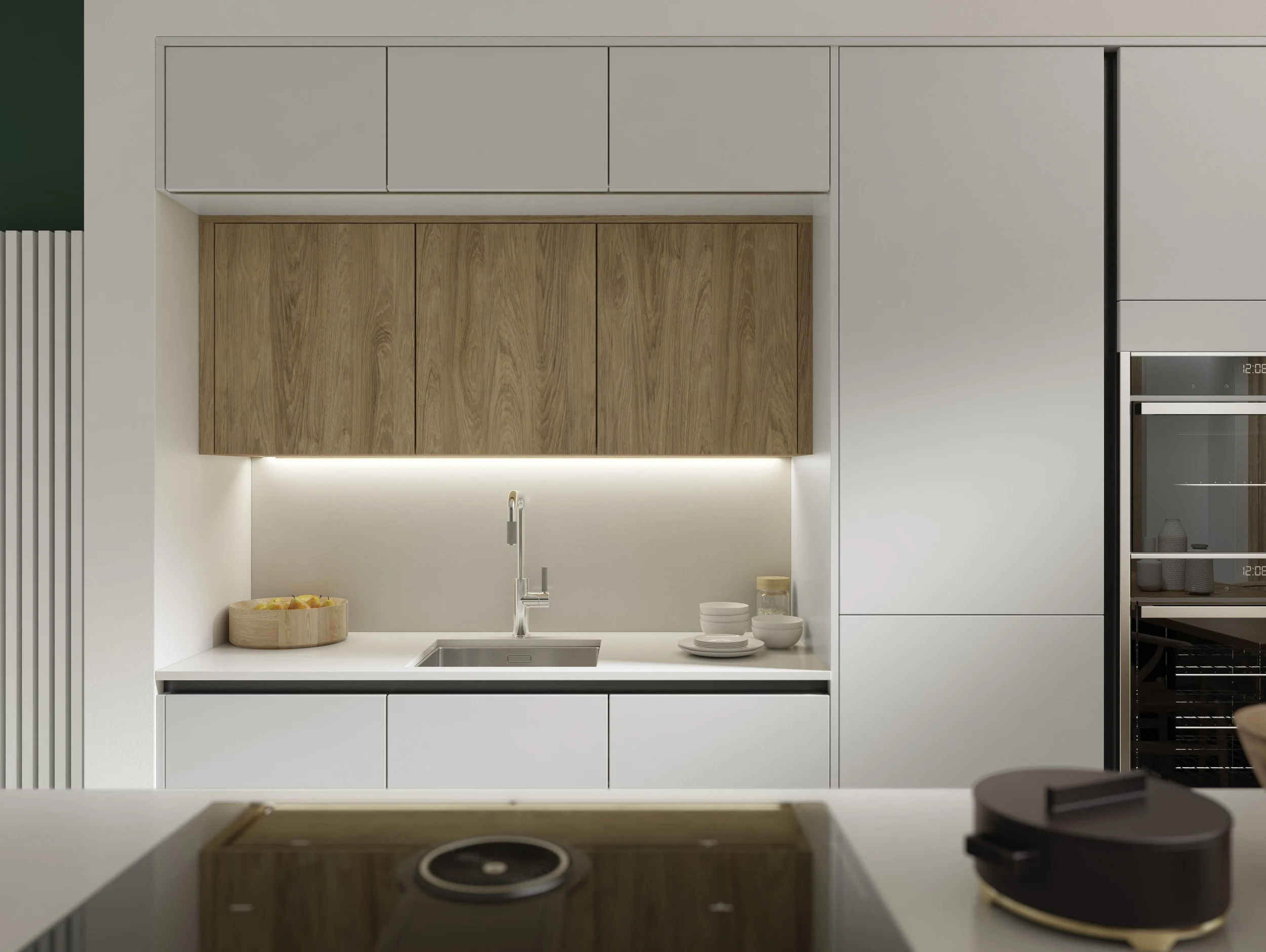
How to Create a Japandi Kitchen in Your Home
Step 1: Plan Your Foundation
Start with your layout and major elements. Consider how you use your kitchen and what changes would improve both function and flow. A Japandi kitchen renovation often involves:
Removing unnecessary walls to create openness
Installing larger windows or adding skylights
Choosing integrated appliances that blend seamlessly
Planning storage to keep surfaces clear
Step 2: Choose Your Materials Mindfully
Select 2-3 core materials that complement each other:
A warm wood tone for cabinets or open shelving
Natural stone or quality engineered surfaces for worktops
A complementary natural material for flooring
Step 3: Perfect Your Colour Palette
Stick to your chosen palette religiously. Every element – from cabinet paint to kitchen textiles – should harmonise within your muted, natural spectrum.
Step 4: Style with Intention
The final styling phase is crucial in Japandi design:
Display only items that are both beautiful and functional
Group objects in odd numbers with plenty of breathing space
Incorporate natural textures through wooden cutting boards, ceramic vessels, or woven baskets
Add just enough greenery to bring life without overwhelming the space
At The Kitchen Store, our design consultations help you navigate each of these steps, ensuring your Japandi kitchen perfectly suits your lifestyle and space.
Best Brands and Materials for Japandi Kitchens
Both German and British kitchen manufacturers offer excellent options for achieving the Japandi aesthetic, each bringing their own strengths to this design philosophy.
German Kitchen Excellence
German kitchens excel at the functional minimalism core to Japandi design. Look for:
Handle-less cabinet systems with soft-close mechanisms that maintain clean lines
High-quality engineered wood finishes in natural tones that resist wear
Integrated lighting solutions that enhance the serene atmosphere
German manufacturers like Nolte bring precision engineering and innovative storage solutions that align perfectly with Japandi principles of hidden functionality.
British Kitchen Craftsmanship
British kitchen designs bring craftsmanship and natural materials expertise:
Solid wood options with beautiful grain patterns that age gracefully
Traditional joinery techniques that ensure longevity and authentic craftsmanship
Painted finishes in the muted tones perfect for Japandi palettes
Recommended Materials for Authentic Japandi Style
Worktops: Natural stone like limestone or engineered quartz in warm, matte finishes that feel organic yet durable
Cabinetry: Oak, ash, or walnut in natural or lightly stained finishes that showcase the wood's natural beauty
Hardware: Matte black, brushed stainless steel, or integrated handle systems that don't compete with the materials
Flooring: Wide-plank hardwood, natural stone tiles, or high-quality luxury vinyl in wood tones that ground the space
Maintenance, Longevity, and Aftercare
One of the greatest advantages of a Japandi kitchen is its inherent longevity. The timeless design principles mean your kitchen won't look dated in five years, whilst the emphasis on quality materials ensures durability.
Caring for Natural Finishes
Maintaining the beauty of natural materials requires understanding their specific needs:
Oil wooden surfaces annually to maintain their lustre and protection
Use gentle, pH-neutral cleaners on natural stone to preserve their appearance
Embrace the patina that develops over time – it adds to the authentic, lived-in beauty
Keeping It Clutter-Free
The Japandi philosophy extends to daily maintenance routines:
Establish daily routines for clearing surfaces and maintaining order
Regularly assess items to ensure they earn their place in your curated space
Use drawer organisers and storage systems to maintain order effortlessly
Long-Term Value
The combination of quality materials, timeless design, and flexible styling means your Japandi kitchen will adapt to your changing needs whilst maintaining its value. At The Kitchen Store, our aftercare services ensure your investment continues to perform beautifully for years to come.
Japandi Kitchen Gallery: Visual Inspiration
The beauty of Japandi design lies not just in individual elements, but in how they harmoniously combine to create a greater whole. We encourage visiting our showroom to experience these materials and finishes in person – photographs simply cannot capture the tactile pleasure of smooth wood grain or the subtle variations in natural stone.
Consider creating a mood board before your design consultation, gathering images that speak to your vision of the perfect Japandi kitchen. Our design team can then help you translate inspiration into a practical plan tailored to your space and budget.
Working with experienced designers ensures that your Japandi kitchen achieves the perfect balance between aesthetic beauty and practical functionality that defines this style.
Conclusion
A Japandi kitchen represents more than just a design trend, it's a philosophy of living that prioritises quality, tranquillity, and connection to nature. For UK homeowners seeking to create a space that serves as both a functional workspace and a peaceful retreat, Japandi design offers the perfect solution.

The style's emphasis on natural materials, clean lines, and thoughtful functionality makes it particularly well-suited to British homes, whether you're working with a compact urban space or a grand country kitchen. By embracing the principles of simplicity, sustainability, and serene beauty, you can create a Japandi kitchen that not only looks stunning but genuinely enhances your daily life.

The investment in a well-designed Japandi kitchen pays dividends in both daily enjoyment and long-term value. These spaces age gracefully, developing character while maintaining their essential calm and functionality. As lifestyle priorities continue to shift towards wellness and mindful living, Japandi kitchens offer a timeless solution that supports both practical needs and emotional wellbeing.
Explore our kitchen galleries to start your journey towards the serene, sophisticated kitchen of your dreams. Our expert team is here to help you navigate every decision, from initial concept through to final installation and beyond.